Showing posts with label exploration. Show all posts

Tuesday, March 17, 2015

Set Orbit Around Ceres

Courtesy of NASA
Dawn, the amazing unmanned spacecraft at the command of Marc Rayman as Mission Director and Dr. Chris Russell as the Principal Investigator with thier crew of scientists and engineers, has entered into orbit around Ceres.  This is a remarkable achievement as it is the first time in human history that an unmanned spacecraft has entered into orbit around a second space body in one mission.  Dawn was able to do this thanks to its multiple ion drives.  Dawn is an amazing spacecraft and will likely find new discoveries at Ceres.

No other spacecraft has been as powerful or versatile as Dawn.  It has been in orbit around the asteroid Vesta and has made geologic observations with spectrographic data.  Then it left Vesta and made its way to Ceres, a 30 month journey.  It did encounter equipment failures, but the crew was able to work around them to keep the mission alive.

Ceres is currently labeled as a Dwarf Planet.  That is the same label Pluto ended up with.  There are other Dwarf Planets of lesser notoriety.  Dawn will take some time to close its orbit around Ceres to get good image resolutions.  Ceres is already causing mystery.  It is sporting a bright spot or two that is making people get messed up hair from all the scratching.  I'm sure conspiracy theorists and ufologist are loving this.  Yep, drama may ensue.

So finding new discoveries at Ceres and being just amazing I think Dawn is flipping the bill.  For sure it is a mission to keep track of.  So here is to the venerable crew of Dawn.  Live long and prosper.

Friday, December 26, 2014

Space Faring Standards

IF we want to be a space faring people, we HAVE to adopt new launch vehicle standards.  This has become painfully obvious to me this fall with that failure of the Antares rocket and the political fallout of the RD-180 rocket engine which makes the Atlas V as useless as if it had a catastrophic in-flight failure.  You can say this sentiment has been building since SpaceX arrived on the scene and Elon Musk talked about improving the rocket.  I see it now.  I see how deficient our rockets have been.  The rocket is basically in a state that the automobile was in the pre-Model T period.  They are costly and unreliable.  They are toys for the rich.  Small efforts have been attempted to bring the launch price down.  The only company that is bringing prices significantly down is SpaceX.  Those prices still need to come down MORE.  SpaceX can't do it alone either.  There needs to be more companies in the effort.  Well, I came up with some standards to start with that should get us in the right direction.  Of course this is just my own opinion.  They cover items from payload to the first stage.

1.  The payload needs to be recoverable in all phases of flight.  Capsules with crews have had abort systems which were high speed rockets that separated the payload (capsule and crew) form the failing rocket and allowing the parachutes to activate and bring the payload safely to the ground.  Why don't we have this on unmanned payloads?  Unmanned payloads today just blowup with the rest of the rocket in case of an abort.  Thus making vapors out of hopes and investments.  Then the insurance companies have to pony up cash.  I have no doubt this drives up cost of launch to some degree.  If some degree of recovery of the payload could be guaranteed I bet cost would come down.

2.  The upper stage needs to be able to orbit the Earth and make a reentry and landing back to it launch site to be able to reuse.  This is a plan for SpaceX.  They want to make the second stage of the Falcon 9 rocket reusable.  They want it to land after a launch back to base, preferably.  Today, all second stages are discarded after launch.  This means all that hardware has to be created from scratch and tested for ever launch.  That's a lot of man hours.  That's a lot of material.  That's a lot of money.  It's just a bad way to operate.  We've just been operating like that since the beginning of the space age.  The one exception would be the Space Transportation System which, arguably, had an orbiter that was held the payload and was also the second stage.  It was totally reusable.  It's drawback was that there was a lot of maintenance to it to get ready for the next flight.  Yet, overall reuseability should bring down the price of each launch.  Beneficial reuseability was demonstrated in the suborbital world with SpaceShipOne in 2004.

3.  The first stage needs to be able to lift the upper stage and the payload to a certain altitude guaranteed even in the event of an engine failure.  One rocket today meets this standard.  That rocket is the Falcon 9.  It demonstrated it in Oct 2012 where one Merlin engine shut down.  The rocket kept on flying and thanks to its design got it main payload to the International Space Station.  If that happened to any other rocket, the mission would have been a total failure.  The Falcon 9 can do this feat because it has 9 rockets which allows it to loose one or two engines before mission failure.  This needs to be a standard in all future rockets.  The area from the launchpad to the altitude where the second stage can ignite is a critical one.  The Earth is the most dangerous object to a flying rocket.  The more distance it can get away from the planet the safer it is.  That's why this standard is so important.  It give a high degree of guarantee to get to that second stage at a reasonable cost.

4.  The fist stage needs to be recoverable in one piece and reusable.  No one has ever accomplished this.  Oh, now your thinking about the SRBs in the STS.  Well, those were not reused in one piece. They were broken down and rebuilt.  I'm not talking about breaking down and rebuilding.  I'm talking about launch, land, recover, refuel, and launch again.  SpaceX is trying to learn how to do this.  They are currently trying to land their first stage on a large barge in the ocean.  Nobody else is even trying.  Well, Blue Origin was proported as wanting to accomplish this but they are not releasing where they are at or how far they got.  With them it has been so long that I can only conclude they were unable to finish the project.  First stage reuseablility is essential to bring down prices.  It represents the biggest hardware in the rocket stack.  It is only a suborbital vehicle by itself.

5.  Intensive and comprehensive checks on first stage, and upper stage systems need to be done at the launch time where the computer has the ability to abort at the sign of any failed test.  Most, if not all, mainstream rockets have implemented this standard to some degree or another.  The more successful the rocket, the more comprehensive their computerized checks are.  This stands to reason.  This is why there are delays at launch time.  Though they may be a little frustrating, I take the delays as a sign that the checks and tests are working and working hard.  It is a good thing.  Could Antares have used more comprehensive checks and tests to avoid its catastrophic failure?  Possibly.  Time will tell.  As far as I can tell, these tests and checks have become more and more computerized over the years.  Where many of them were just people staring at numbers on a screen to see if they see any anomalies.  This is thanks to miniaturization of the computer circuits on silicon chips and more sophisticated software.  Progress in this area should continue.  We need to get smarter software and more powerful computers as time goes on.  I have no doubt this trend will continue.  So this standard is the one standard that is being implemented by all successful launchers.  Great!  1 out of 5 ain't bad?!

Elon Musk, in an interview with Walt Mossberg and Kara Swisher, mentioned that reusable rockets were needed to make space more accessible.  So he's working on the reusable rocket.  In my estimation, reusable stages just cover 2 of 5 standards that ought to be implemented by all launchers if we are going to be a people that live and work in space.  I don't mean low Earth orbit.  I mean the Inner Solar System, to include: the Moon, Mars, Venus, Mercury, Asteroid belt, and Near Earth Objects.  It's time we look at the big picture and make plans to inhabit this playground.  To do it we not only need to be scientifically smart but also economically smart in all things.

These standards are mostly from other people through the decades.  Many have realized we needed reusable vehicles to access space to include many science fiction writers.  Computerized tests came out of necessity from real life launch companies and government entities. Von Braun and his team implemented the multi-engine first stage to where if one goes out it could still get to orbit.  Maxime Faget came up with the idea of a rocket as a launch escape system for crews.  I just expanded the possible idea to non-human payloads.

I'd like to see other launch companies make new rockets that take on these standards.  I know a couple of start ups that are targeting the small satellite launch market that design their rockets with multiple engines on the first stage.  One of them is called Firefly.  We need to wait and see what happens.  For now, we have to make due with the clunker rockets as we see Falcon 9 develop and incorporate 4 out of the 5 standards I've stated.  Watch the other companies tremble in fear.

Thursday, September 11, 2014

Future Growth of Pressurized Cargo Deliveries Imagined

Ares V
NASA wants to build a rocket bigger than Saturn V, the Space Launch System 130 metric ton launcher.  This is to get the hardware they need to go to Moon, Astroids, and Mars.  It's basically a cargo hauler.  Now the Ares V, from the cancelled Constellation Program, was going to be a 188 metric ton rocket.  I had done some of my own calculations to realize that it could potentially haul the equivalent of 4 shipping containers to low Earth orbit.  Now, Saturn V was a 118 metric ton rocket.  Take a moment and thing about these numbers.  Think, also, about how much stuff people use every day.  Most of the stuff we use come in shipping containers.  Now consider a city in space.  The content of the many shipping containers that come by train and sea ships has to be launch off the Earth.  Has it dawned on you how much stuff such a city will need?  Has it dawned on you how big the rockets need to be to launch such stuff?  I came to realize that we are just at the very beginning of space colonization.  We have cargo carriers that supply the International Space Station (ISS) now that are both from government and commercial entities.  How much will the rocket launchers of the future have to grow to meet the demand?

ESA ATV
I looked at data shipped to the ISS in 2012.  I then reduced the number to tons per person per year.  I got 3.8 tons.  This is a pretty rough number.  I then did the same with the United States in 2012 and got 6.2 tons per person per year.  It would seem that the astronauts and cosmonauts are living on a shoelace compared the people on the ground.

If that is the case, our current launchers are, for all practical purposes, the smallest they can be to support 6 people permanently in orbit.  Falcon 9 (13.2 metric tons), Antares (6.1 metric tons), Ariane 5 (16 metric tons), Soyuz (6.5 metric tons), and H-II (10.1 metric tons) are the launchers for cargo to ISS.  This is our baseline.  On average, our launchers are 10.4 metric tons to low earth orbit.

If the astronauts lived like we do on earth, by how much will our launchers grow?  I calculate that our launchers would have to be 19 metric tons on average for 6 people with 6 launches per year.  You can see how that number already dwarfs our current launchers.

Now what if we had more than one space station or one big one, in orbit and a total of 100 people living in space full time?  If they live like astronauts do now, they would need 380 tons launched from the ground annually.  They will need launchers of 1,040 metric tons to launch 6 times a year.

Now if those 100 people lived like we do on Earth, then they would need 620 metric tons in a year.  The launchers would need to be 1,900 metric tons for 6 launches.

Can you imagine a 2000 metric ton rocket launcher?  That's about 17 times the size of a Saturn V.  That is huge.

You might say what if we increase the number of launches a year?  Won't that decrease the size on the average launcher?  Sure it will.  Let's see....  I calculate that for 100 people that need 620 metric tons a year and 20 launches, they would need average launcher size of 510 metric tons.  That's still about 4 times the size of a Saturn V.  Now 20 launches a year is quite a hefty schedule.  I suppose  if they spread out the load over 4 companies and/or countries it's not so bad.  Though a 510 metric ton rocket is quite large, I believe it is within the realm of possibility to accomplish.

You can see how the number expand with the increase of people.

This is only to LEO.  What about the Moon and Mars?  Well the numbers get exponentially larger.  So the rockets get exponentially larger.  The ones we have now are puny by comparison. That is why people have suggested learning to 'live off the land' and reduce the need for new cargo from Earth.  Even in deep space living off of asteroids and comets will be necessary.  It's just too much for us to lift that much stuff out of the Earth's gravity well.  The other thing we can learn to do is recycle, and recycle everything.  Air, water, waste (yes No 1 and No 2), soil, plant matter, and parts are things we need to learn to recycle if we are to live in space, or on the Moon, or on Mars.  New technologies are bound to be needed to this end.  Are we up for the challenge?

Thursday, July 31, 2014

Congress is at it again....SLS underfunded.

Well, here we are again.  For some reason, Congress cannot fund a rocket once it demands it.  Congress should desist from demanding rockets from NASA.  Somebody please sue Congress for overstepping their constitutional bounds.

On July 23rd, 2014, the Government Accountability Office (GAO) said that NASA didn't have enough money to complete the Space Launch System (SLS) in time for the 2017 first launch of the rocket according to Marcia S. Smith's of SpacePolicyOnline.com article entitled "GAO Warns NASA $400 Million Short to Finish SLS by 2017" (click here to see article).  What the hell?

The NASA Authorization Act of 2010 "required immediate development" of the SLS.  Where does it say in the Constitution that Congress can require development of anything?  Such a demand would lie in the executive branch of government, not the legislation.  Well, legally I'm sure I am wrong here, but logically I am right.  NASA, DARPA, and other government research agencies ought to be directed by the executive branch only and not by the legislative.  The reason is obvious, research drives military power and economic health of the nation.  Yes, it's national security.  See, I think economic health should be a part of national security and not just national secrets.  Yet, we have to live with these short sited authorization acts.  Ideally, any legislation authorizing money to a very large project ought to grantee funding for the projected life of the porject.  But the authorization act of 2010 only gave money to 2013. What the hell! 

 I knew this was coming, and when it came I still felt mad and betrayed.  This is exactly why we are not further in our space program as we expected to be.  This questionable way of financing large NASA projects puts into question Congress' concern for the nation's welfare.  This system is broken.  It needs to be redone, rethought over.  I think its time for the US people to start thinking of better ways to proceed in space.  The space research has expanded to a point where there is more space projects than there is available money.  There are commercial alternatives now to launching spacecraft.  There are new spacecraft designs with cost in mind.  Tell Congress to grow a brain and get smarter about space.  It's no longer about jobs in a particular state.  It's about the economy as a whole benefiting from research that is waiting to be done.

Monday, June 10, 2013

Solar Impulse At St Louis

On one of the nicest evenings in recent memory in St Louis County, Solar Impulse silently eased its way to Lambert Airport from Texas.  It was a cool night without a cloud in the sky.  It was perfect.

I had just purchased a Fujifilm FinePix camera on discount from Amazon.com.  I had some initial practice with it at night from my home.  I took a couple of pictures of stars, clouds, birds, and sunrise.  The landscape was flooded with trees which served as a type of boarder anytime you look at the sky.

It was Monday evening, and I knew the plane was coming.  The local paper website, St Louis Post Dispatch, had an article saying it was on its way.  Unfortunately it would arrive right after tornadic weather hit the airport.  Even with these events in mind, I felt excited.  Pulling up the Solar Impulse website, I could track Bertrand Piccard's progression through the midwestern countryside.  He yet seemed far away.

A skilled pilot, Betrand was a member of a family of explorers.  So much so that Jean Luc Picard character in Star Trek was modeled after the twins Jean and Auguste Piccard.  Bertrand was Auguste's grandson. 

The chat on the site was active and the mood was joyous.  Much was about the ground crew was doing as seen in the live video stream.  I logged in to join the conversation, though my mind was on the things that were about to occur.

I noticed that the map showed Bertrand would fly in a holding pattern right near my home.  My mind raced.  He was still some miles out.  At around Washington he crossed the Missouri River, then followed it.  I realized he was on his way.  I sent an email to the ground crew who passes on messages to Bertrand and saying, "Smile after you cross I-64 and you follow Missouri river a bit.  I will take your picture.  Your will be flying by my home."

I employed my wife to track the craft on the net while I gathered the FinePix, binoculars, and tripod and headed outside.  My wife texted me updates, "Get ready. Plane just shift down south angle over mo river."

I scanned the skies.  There were several things out that night and the visibility was excellent.  Planes, birds, stars; it was all there.  My only worry was the tree line.  Will it allow me to see Solar Impulse at all?

Then, I made out a red light and a green light just coming slowly over the trees.  The lights were quite far apart, then I realized.  That's it.

I nervously tried to take photos of it, but it would not show up on my camera view.  I ended up pointing at it and shooting and hoping for the best.  My wife came out.

She indicated a better spot for me to shoot.  The plane was in an obvious holding pattern going round in circles.  I set up in the new spot and then I heard my wife yell.  Bertrand had put on the lights.  I think he got my email. :-))

Now it was easy to get a picture.

It looked like some kind of slow moving extraterrestrial thing in the night sky.  It was so quiet.

We later went inside and almost 2 hours later Bertrand landed at Lambert.  The news said they had to use an inflatable hangar to house the craft since the designated hangar had been damaged by tornadoes.

On Friday afternoon my wife and I went to see the plane in person.  It was in a large aluminum framed tent and several visitors were there along with the ground crew.

I got over 100 pictures in of the plane and of the posters they had around.  Its massive wingspan was tremendous.  The cockpit was open and there was a stuffed animal mascot in it.  While the basic design of the craft was not new, the materials and technologies that went into it were new.

Solar Impulse as a project was to give awareness of alternative energies.  It was the first solar plane to fly day and night without consuming any fossil fuel.  I'm very glad my wife and I got to see it.


Wednesday, May 22, 2013

Getting To Mars Depicted (Part 2)

In Part 1, we went through how much a trip to Mars costs in terms of fuel and hardware.  It takes 8 large rocket launches just for one manned mission.  That is about 75% the launches of the Apollo program to the moon.  Back then, the US Congress was willing to spend the money, but today they are holding back wanting to cut NASA's budget.  That's nothing new.  Congress has been cutting NASA's budget for at least the past 20 years.  A manned mission to Mars is quite a huge undertaking.  I know I did not talk about the radiation concerns or other crew health issues.  NASA likes to mention those.  They don't like to mention how much it would cost, and I think that is an issue that Congress and the public need to address.  The more the public knows about this issue the better.  How could we possibly reduce the cost?  Well, I've got 2 ideas.  Both of them are along the lines of mass transportation and reusable assets.  Reusable transportation assets and multiple manifests could provide more effective financing than one mission going alone by any one government space program.

Many Launchers for 1 Mission
Reusable Assets

When talking about reusable assets, a tug to take payloads from Earth orbit to Mars orbit and a reusable Mars lander/launcher come to mind.    For Mars, these assets have to be very sophisticated to include transferring of fuel and other consumables.  They would have to be able to be controlled remotely with some automation and manually by any crew.

I've talked about a reusable tug before.  For Mars, having a large tug that can travel many times between the planets could provide the means to take multiple missions on each trip.  Distributing the cost of the trip among several customers could make the trip financially possible.  I like to imagine such a tug as being based on the concept of the Saturn S-IVB.  It would have to be much larger.  I could have duo-propulsion: traditional chemical booster; electric propulsion such as ion drive or plasma drive.  Space.com has a great article on electric propulsion called How Electric Spacecraft Could Fly NASA To Mars.  A robitic arm such as the Canadarm 2 could provide a means of capturing and docking many different types of space modules.  Also it should be able to carry many modules to include unmanned and manned modules simultaneously.  Our module technology has become quite sophisticated so I don't think that would be a problem.  One of the biggest issues of such a craft would be electric power.  Solar panels are nice, but large ones would be needed to power the electric propulsion.  They also should be able to retract and deploy on command and often.  I expect that aerobraking maneuver would help reduce the amount of fuel needed for each mission.  Solar panels would need to retract for that maneuver lest they are damaged.  These panels would have to last a long time.  Another option, though less popular, would be giving the craft its own nuclear power reactor.  Of course, responsible handling of the nuclear material is a must; including a disposal plan for the depleted nuclear material.

A reusable lander/launcher is necessary. The idea of landing on an atmospheric planet is enticing and yet hard.  If you going to reuse the lander, it has to launch from the planet as well.  We've never created a craft like that before.  It would need a heat shield that can pop off and be replaced easily (by robotic means), a reliable engine, and large tanks for fuel.  After every launch back into orbit, it would need to be serviced and refueled for the next landing.  This craft is important because for one manned mission, NASA would use 3 landers and 1 launcher.  That's 4 vehicles.  Consolidating hardware complexity and weight into one vehicle should save on cost.  Using this vehicle for many missions should be a savings multiplier.

What do we really want to do on Mars?  Do we want to just plant a flag and walk around a go home?  No, many folks want to do many things.  From geology to colonization to terraforming, Mars has inspired many possible missions.  If we go with throw away assets, we won't be able to afford getting there but once in a generation if at all.  Mars should also only be the first step to exploring and exploiting the inner solar system.  Therefore, reusable assets are a must.  We must build an infrastructure.

Multiple Manifests

Mars Plane
 To spread the cost of trips to Mars and back, it would seem a no brainer to get as many different missions and customers to sign on.  It's like filling up the cargo hold and passenger cabins of a larch ocean fairing ship to make trips between continents across a large ocean.

Imagine multiple unmanned mission accompanied by one manned mission packed on the reusable tug that is about to depart Earth orbit.  These mission could be from all types: orbital, landers, rovers and sample returns.  The landers, rovers, and sample return missions can get loaded up on the reusable lander/launcher to get down to the surface along with the assests of the manned mission.  It seems they would all land in one spot.  Well, that could create the opportunity to have some planetary transportation services such as fast rovers and aircraft.  You can quickly imagine a multitude of missions and activity around and on Mars.

Spreading the cost for each trip and back from Mars among many customers seems reasonable.  Using reusable assets such as a reusable transportation tug and a reusable lander/launcher goes hand in hand with multiple manifests.  Such an effort could easily be a commercial venture.  Such an infrastructure could have the effect of researching the red planet in a much faster fashion than what we do now.  If regular trips to Mars every 3 years is sustainable then we would have established a permanent link worthy of colonization.

Sunday, September 16, 2012

Lighter Than A Feather

Balloons and Airships of old
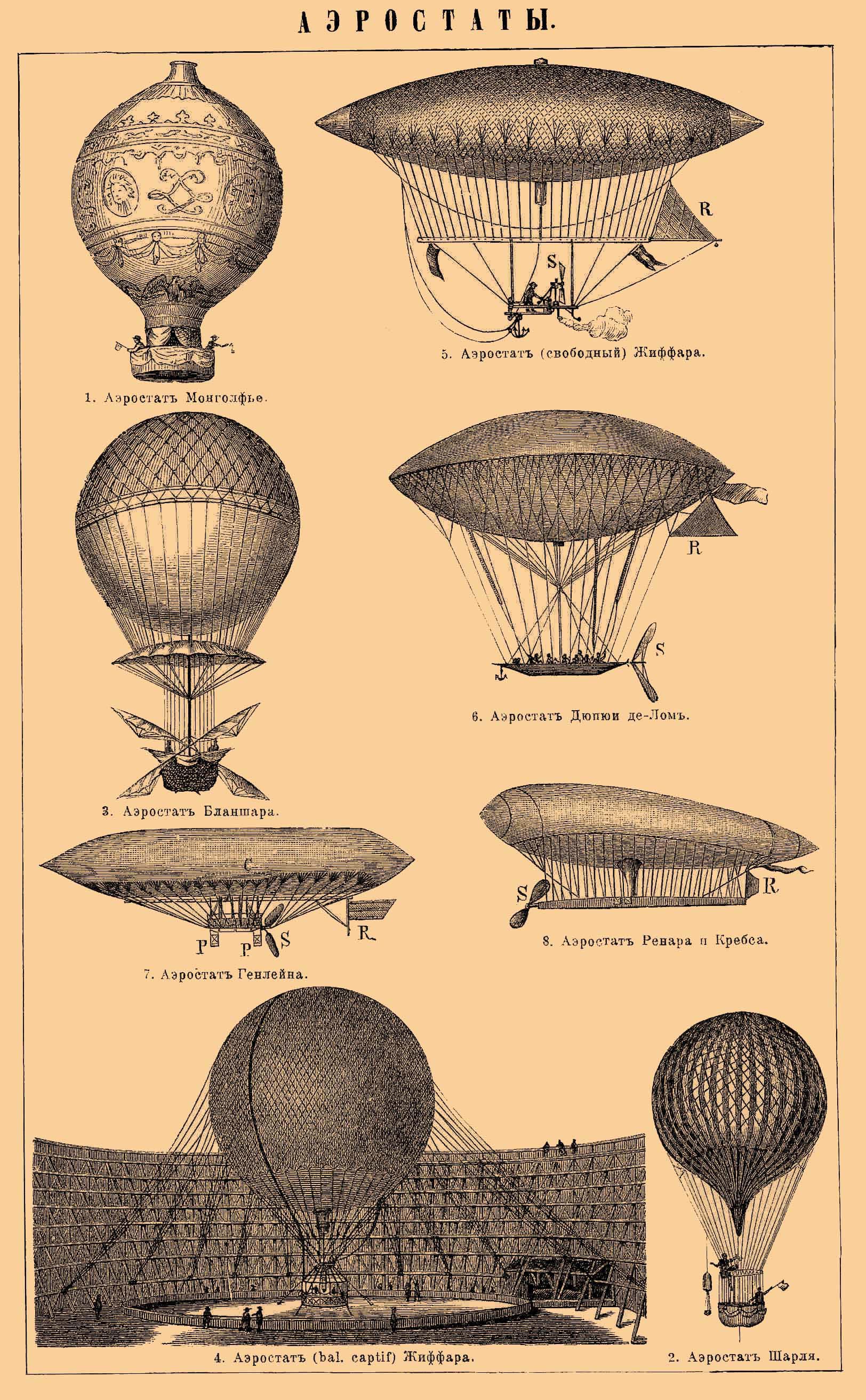
In history, lighter than air craft were the first successful manned aircraft.  The first manned hot air balloon was launched in late 1700's.  The first manned hydrogen balloon was also launched in late 1700's.  The American Civil War saw the use of balloons for map making and reconnaissance for the military, thus starting the precedence of the Army Air Corps that later became the United States Air Force.  These low-tech ships of the air gave man the first experience in the heavenly expanse that was the domain of birds.  For the first time, man could get a birds' eye view of the ground.  From balloons came the dirigible or airship which had steering and propulsion in the form of propellers.  Man learned how to navigate the air.  These craft preceded heavier than air craft such as airplanes by over 100 years.  Hot air and helium are the most common means of providing buoyancy in the air.  Today both these types of lighter than air craft are in use.  Recreation, commercial, military application, and exploration applications use balloons and airships.  Let's take a look at the different lighter than air craft.

I recently went to the 40th Hot Air Balloon Race in St Louis.  Each balloon had a ground crew and pilot.  Each had a basket and burners.  The shapes and colors of the balloons varied.  The pink bunny balloon lead the charge and in fact was 'hare' of the race, just like in dog racing.  The balloon who dropped a bag of seed closest to the pink bunny balloon where it landed won.  I don't know who won, but I got some good pictures of the prep and race (see slideshow below).  Since these balloons are not powered, they travel with the wind.  A good pilot can direct the balloon with the knowledge of knowing what the winds are doing at different altitudes.  These balloons started at Forest Park and went West.  On my way home from the park, my wife and I got to see the balloons over head on highway 40 (I-64).  It was a spectacular sight.  People on bridges, out of their homes, and from their parked cars watched these behemoths float on by.  Large colorful silent craft seem to attract attention.


Created with flickr slideshow.

MA-3A at New Orleans
Airships have a military history.  In World War I they were used as bombers.  After that war, German engineering in the rigid airships called Zeppelins were distributed among the allied forces.  The United States ended up getting airships by buying and building them.  The US Navy and Army operated these ships of the sky.  Today the US Navy owns one airship called MZ-3A.  Its and ship used for research, but it was used by the Coast Guard to survey the Deepwater Horizon oil spill in the Gulf of Mexico in 2010 and to coordinate cleanup efforts.  The US Army contracted Northrup Gruman for an airship they call Long Endurance Multi-Intelligence Vehicle (LEMV).  It's a hybrid airship.  That means that it uses aerodynamics to produce lift along with helium.  It's being marketed under Hybrid Air Vehicles.  It touts long endurance, heavy lift of cargo, and landing anywhere without special infrastructure.  It's the most advanced airship today.  The other modern semi-rigid airship is the Zeppelin-NT.  It touts all weather flying, something that was sorely lacking in the airships of the past.  The Zeppelin-NT is a passenger craft and is in the tourist business.  They are trying to market it for cargo, but I have yet to see anything written about successful cargo flights.  Unfortunately, both of these high tech airships suffer from a lack of business, so not many exist.   Most commercial airships today are the simple blimp.  These are large bags filled with pressurized helium with gondolas (cabin for pilot and passengers), propellers, and tail fins.   You see them with large commercial signs on them, and they provide a stable in-flight platform for cameras for a sport stadium.  There is another type of airship that's for recreational use, it's the hot air airship.  Like the hot air balloons these are colorful and take just a couple of people aboard.  They do have propulsion and steering. Unlike airships, they handle their altitude via adding hot air.  I cannot speak of their performance though.  In the area of exploration, one of the oldest missions was that of the Norge airship which crossed the Artic in 1926.

Tandem flying high
Some balloons can fly very high.  So high that space programs such as NASA make use of them for flying telescopes and experiments.  They can reach to heights about 19 miles in the air.  The air is very thin up there, almost like space itself.  JP Aerospace is a private organization that has been sending high flying balloons for a while.  They want to go bigger.  They want to make a high flying station called Dark Sky which would serve as a staging area for two different airships.  One launches from the ground to Dark Sky and the other launches from Dark Sky to orbit.  That's a high flying idea, float to space.  Recently they made an unmanned airship that was the highest flying airship ever.  They called it Tandem.  JP Aerospace is one of the few organizations doing exploration and taking science experiments to the edge of space.  Now, let's mention the balloon taking a man up near space so he can jump out.  I''m talking about Redbull's Stratos.  It can hold 30,000,000 cubic feet in volume, that's really big.  The thing about these high flying balloons is that their payloads usually get to the ground by parachute and not by landing as the recreational hot air balloons do.  So jumping out of a balloon near 100,000 feet seems rather reasonable though frightful.

 
Well, there you have it.  A brief synopsis of lighter than air craft.  An old idea still living on.  Young person, you are the future.  You need to decide whether lighter than air craft are relevant for the future, or should go the way of the dinosaur.