Showing posts with label stl. Show all posts

Monday, June 10, 2013

Solar Impulse At St Louis

On one of the nicest evenings in recent memory in St Louis County, Solar Impulse silently eased its way to Lambert Airport from Texas.  It was a cool night without a cloud in the sky.  It was perfect.

I had just purchased a Fujifilm FinePix camera on discount from Amazon.com.  I had some initial practice with it at night from my home.  I took a couple of pictures of stars, clouds, birds, and sunrise.  The landscape was flooded with trees which served as a type of boarder anytime you look at the sky.

It was Monday evening, and I knew the plane was coming.  The local paper website, St Louis Post Dispatch, had an article saying it was on its way.  Unfortunately it would arrive right after tornadic weather hit the airport.  Even with these events in mind, I felt excited.  Pulling up the Solar Impulse website, I could track Bertrand Piccard's progression through the midwestern countryside.  He yet seemed far away.

A skilled pilot, Betrand was a member of a family of explorers.  So much so that Jean Luc Picard character in Star Trek was modeled after the twins Jean and Auguste Piccard.  Bertrand was Auguste's grandson. 

The chat on the site was active and the mood was joyous.  Much was about the ground crew was doing as seen in the live video stream.  I logged in to join the conversation, though my mind was on the things that were about to occur.

I noticed that the map showed Bertrand would fly in a holding pattern right near my home.  My mind raced.  He was still some miles out.  At around Washington he crossed the Missouri River, then followed it.  I realized he was on his way.  I sent an email to the ground crew who passes on messages to Bertrand and saying, "Smile after you cross I-64 and you follow Missouri river a bit.  I will take your picture.  Your will be flying by my home."

I employed my wife to track the craft on the net while I gathered the FinePix, binoculars, and tripod and headed outside.  My wife texted me updates, "Get ready. Plane just shift down south angle over mo river."

I scanned the skies.  There were several things out that night and the visibility was excellent.  Planes, birds, stars; it was all there.  My only worry was the tree line.  Will it allow me to see Solar Impulse at all?

Then, I made out a red light and a green light just coming slowly over the trees.  The lights were quite far apart, then I realized.  That's it.

I nervously tried to take photos of it, but it would not show up on my camera view.  I ended up pointing at it and shooting and hoping for the best.  My wife came out.

She indicated a better spot for me to shoot.  The plane was in an obvious holding pattern going round in circles.  I set up in the new spot and then I heard my wife yell.  Bertrand had put on the lights.  I think he got my email. :-))

Now it was easy to get a picture.

It looked like some kind of slow moving extraterrestrial thing in the night sky.  It was so quiet.

We later went inside and almost 2 hours later Bertrand landed at Lambert.  The news said they had to use an inflatable hangar to house the craft since the designated hangar had been damaged by tornadoes.

On Friday afternoon my wife and I went to see the plane in person.  It was in a large aluminum framed tent and several visitors were there along with the ground crew.

I got over 100 pictures in of the plane and of the posters they had around.  Its massive wingspan was tremendous.  The cockpit was open and there was a stuffed animal mascot in it.  While the basic design of the craft was not new, the materials and technologies that went into it were new.

Solar Impulse as a project was to give awareness of alternative energies.  It was the first solar plane to fly day and night without consuming any fossil fuel.  I'm very glad my wife and I got to see it.


Friday, April 5, 2013

The Return Of Chesterfield Airshow

TBM Avenger 2007 Airshow
The Chesterfield Air Show is coming back in 2014.  We haven't seen it since 2007, which I attended.  I love airshows.  The flight demonstrations are great but I like the static displays best.  That's where you get a close look at the craft, touch it, and talk to pilots and owners.  It's just a thrill to get next to a hunk of metal that can lift itself in the air.

According to the St Louis Post Dispatch reported in it's article Spirit of St Louis to hold anniversary show article that this will be a one time show.  Of course that could change and it could become an annual event.  At least that is the inference.

C-2 Greyhound 2007 Airshow
The previous air show had a county fair attached to it.  The one next year will not but will be on a STEM (Science Technology Engineering, and Mathematics) bent.  I really think this is a worthy cause.  We need young students interested in these fields to fuel our technology research machine.  Aviation is a wonderful field to demonstrate what you can do with research.  Old engineering techniques, 'war' stories (stories of experience),  new materials, and new gadgets are some of the things you can pick up from air shows.

Kudos to St Louis County for this airshow.  I encourage everyone who can to come out next year and check it out.  For those not in Missouri, keep the look out for your local airshow and support it.  Many airshows die out because of lack of participation and that's a sad thing.  I encourage the STEM effort and airshow partnership.  It seems a good need and solution effort.

(Pictures shown in this post were taken by E C Holm in the 2007 Chesterfield Airshow)

Friday, March 8, 2013

Learjet In Chahokia

This story made the national news.  A Learjet had landing gear trouble and took it's time to figure out how to land at St Louis Downtown Airport in Cahokia, Illinois.   The plane ended up making a safe landing at Lambert Airport at the pilots request for a wider landing strip.  The front gear was the one the pilot was concerned about.  Apparently it could come down and retract, but it was 30 degrees tilted off center.  That was revealed to the pilot after a flyby of the tower at the St Louis Downtown Airport.  The crew and eight passengers were aboard.  I'll comment about the aircraft and the landing.

Learjet 45
Learjet is the maker of business jet aircraft that have better speed than airliners.  The Learjet in the story was a model 45.  It has a cruise speed of 500 mph and a range of 1968 mi.  It was developed in the early 1990's so it's not a new aircraft.  In fact, there was an upgrade to this model called the model 45XR.

With nose gear problems, a pilot might try keeping the nose in the air while landing and slowing the plane to a near stop.  I've seen this maneuver done by F-15 pilots.  Apparently they like to see who can keep the nose up the longest.  I don't think a Learjet could do such a stunt.  The pilot might have preferred to let the nose down as slow as possible.  The Grimli Glider had a nose gear that didn't want to lock as one of its problems.  The gear collapsed on landing and the front part of the fuselage halted the aircraft.  The pilot of the Learjet took a long time to land apparently figuring out the best way to minimize damage to the plane and injury to the passengers.  He tried a couple of times to land but aborted before landing at Lambert.  To his credit, he succeeded without incident.

As to emergency landings, this one ended on a good note.  Too often they don't end well.  I suppose it made the national news because the pilot requested the main airport rather than the smaller one.  The story was covered by Fox 2 News. 


Friday, February 15, 2013

A Govonor And His Beechcraft

Well, recently the Missouri Governor bought a plane .  Well technically it was Missouri Highway Patrol that bought it.  The Governor is going to use it though.  This caused the legislature to complain because of the cost and the fact they weren't informed of the purchase beforehand.  Could we call this Missouri Force One?  Not likely.  The aircraft is far from an air liner like Air Force One is.  It happens to be a King Air 250 made by Beechcraft.  The plane is also supposed to be used by Highway Patrol for drug interdiction.  Let's check out its specifications and the company that markets it.

King Air 250
It's max speed is about 356 mph.  Its range is about 1362 miles with four passengers.  It can operate up to 35,000 ft.  It can carry up to 10 passengers with one pilot.  That's not at all bad for a prop plane.  I can see the justification of using it for law enforcement.  It could track ground vehicles quite nicely.  It seems to be more economical than a jet.  It only runs $3.06 a mile.  It can cover the State of Missouri handily.  The state is only 240 miles by 300 miles.  Add some surveillance devices on the craft and you have a good platform for law enforcement.  Missouri is located in the middle of the continental United States so we get a lot of through traffic that's legal and illegal.  It should be a nice plane for the Governor as well to travel to other states and such.  Though the public might think of planes as being a cost just for the big wigs, AVweb put out a good article about state planes which explains cost and usage of these aircraft.  There seems to be a valid argument for these planes.  Coupled with another mission of law enforcement, it seems the administration has done its homework.


Beechcraft is a company that markets these small business planes though they are manufactured by different companies.  Its a company that started in 1932 and was bought up by Raytheon in 1980.  Raytheon merged it with Hawker in 1994.  In 2006, Raytheon sold the company to Goldman Sachs and Onex Corporation to make Hawker Beechcraft.  The recession was not good to the company.  They went dove into bankruptcy and pulled out of it in Oct 2012.  It now stand proudly on its own as Beechcraft Corporation.  Hawker, of course, is the legendary company the made the Hawker Hurricane of Battle of Britain fame.  What a history for such an iconic brand.  I hope the best for them.

There you have it. A legislature up in arms, a Governor with a plane, and a company getting back on its feet.  What amazing times we live in. 

Monday, February 4, 2013

A Short History Of New Commercial Space

While I don't claim to have the whole story behind the new commercial space effort, I did start to follow it in spring 2004.  I think some of the 'old guard' of spaceflight are trying to discredit the new companies.  Some of the attacks leverage peoples' ignorance on how these companies got their start.  So, here's a layout of the history of new commercial space.

Mike Melvill and SpaceShipOne
Now its 'new' commercial space because NASA and the US Military have contracted with commercial companies to launch satellites into orbit since the beginning of the space race.  Those were cost plus contacts.  Boeing, Lockheed, and McDonnell Douglas were among these companies, and they made up the establishment.   In 1996 the X Prize put set up a competition for the first company to send 3 humans to suborbital heights twice in two weeks with the same craft.  I have to say that back then the X-Prize foundation set up shop at the St Louis Science Center.  Such a feat was not done by anyone including NASA and Roscosmos.  That may sound strange, but orbital flight and flights to the moon were more important than suborbital flight in the 1960's space race.  We're talking manned missions here.  This would be a coup for reusable spacecraft.  In 2004 Scaled Composites won.  Its SpaceShipOne did 3 space flights that year.  Mike Melvill was one of the pilots and was the first commercial astronaut pilot.  The first was a test flight while the other two were for the prize.  Instead of sending up 3 people, they had the pilot and the equivalent weight of two other bodies.  SpaceShipOne and its mother ship WhiteKnight became the first totally reusable launch system since the X-15 and its B52 mother ship.  After the win, Richard Branson contracted with Scaled Composites to make SpaceShipTwo and WhiteKnightTwo thus forming Virgin Galactic.

Armadillo's Pixel
In that competition there were several teams and some have gotten some momentum and contracts.  Armadillo Aerospace went on to win in the Northup Grumman Lunar Lander Challenge level 1 after the X-Prize.  They also have paired up with Space Adventures to provide a suborbital experience to tourists.

Of course, Space Adventures was the company that started the space tourism with Dennis Tito the International Space Station in 2001.

Masten Space Systems competed with Armadillo Aerospace in the Lunar Lander Challenge.  They managed to win the level 2 prize.  Now they are pursuing reusable suborbital launch rockets demonstrating VTVL technology.  NASA has long used sounding rockets for research since the V-2 rocket.  Those were single use rockets.  NASA has been experimenting with these reusable rockets from both Armadillo and Masten in the last couple of years to present.  The benefits of such vehicles are obvious.  They supply multiple missions.  I think of Masten and Armadillo as a type of rocket company that is contracted by other rocket and/or space companies rather than catering to the public.  These guys seem small, but they are not to be underestimated.  Once they mature the technology, space will never be the same.

SpaceX Dragon
Other companies sprung up with the X-Prize momentum.  Space Exploration Technologies started in 2004 and had a preliminary design of their Dragon capsule and a family of rockets known as Falcon.  They were going after the cost plus launch companies and a cheaper way to launch to orbit.  At this time they received no government moneys.  It wasn't until the X-Prize was won that NASA seriously looked at the new companies. XCOR came up with a space plane called Xerus around 2002.  Now, they are touting a smaller suborbital space plane called Lynx.  If and when the Lynx flies, it will be the first fully reusable commercial suborbital space plane in a single stage.  Now XCOR has plans to use the old Space Shuttle landing strip in Cape Canaveral for the Lynx.

Of all these space companies, one really is in a league of their own.  Bigelow Aerospace makes inflatable space stations.  They started in 1999.  Their design was based on some inflatable space modules ideas from NASA.  In 2006 and 2007, they launched two test modules that were successful, Genesis 1 and Genesis 2.  Now NASA has bought a small inflatable module to attach to the ISS and taken up there by SpaceX's Dragon spacecraft.


What's next for space competition?  There a current competition, the Google Lunar X-Prize.  This started in 2007.  Watch these competitors.  The idea is to put a rover or probe on the surface of the moon.  Yes, commercial space is looking at the moon even if NASA is not.  If all goes according to pattern, one or two teams will spearhead through and land taking the prize.  Then contracts will emerge from NASA and other space companies.

NASA Administrator Bolden congratulating Musk after COTS demo
When NASA got interested in this New Commercial Space, they started with a program that was designed to check out then new companies capabilities.  This program was called Commercial Orbiting Transportation Services (COTS).  It started in 2006 with SpaceX and Rocketplane Kistler.  SpaceX proved their worthiness but Rocketplane Kistler was another story.  It failed and put a black mark on commercial space.  In its place, NASA elected Orbital Sciences.  This company started in 1982 with the advent of the Pegasus air launched rocket.  It seemed to be a bold attempt at making access to space cheaper at the time.  Orbital still operates and sells launches with Pegasus and with other more traditional rockets.  Orbital has had some setbacks.  Now its fixing to launch its new Cygnus spacecraft and Antares rocket to satisfy COTS.  Now NASA has Commercial Resupply Services (CRS) contracts with SpaceX and Orbital.  They also are hosting a competition for development of hardware for commercial companies to transport Astronauts to orbit in their Commercial Crew Development (CCDev) program.  COTS, CRS, and CCDev are the programs that give money to the competing companies so far.

Now for two humble space companies.  In 1998, UP Aerospace was founded.  Their launch vehicle is a small suborbital rocket.  They have scored some NASA and DOD contracts.  They have been launching from Spaceport America in New Mexico since 2006.  In 1977 the concept of an all volunteer lighter than air company was imagined.  Out of that meeting came JP Aerospace.  It may be the oldest commercial space company that was not part of the establishment.  They have launched many balloon missions to the edge of space.  They have even launched some rockets from their balloons.  Their ultimate goal is to create a ground to orbit system using airships and a lither than air station.  It sounds wacky, but to me it seems more plausible than the space elevator concept.  To their credit, JP Aerospace made and flew the highest dirigible ever to fly called the Tandem in 2011.

Well, that's the start of the New Commercial Space.  It started with just dreams and private money and now NASA is helping out here and there.  New companies are still being made and the market is likely to grow.  Deep Space Industries wants to mine asteroids;  Golden Spike wants to sell you a ticket to the moon; and Stratolaunch wants to air launch medium sized rockets.  These were formed in 2011 and 2012.  This is history in the making.  This is rocket science and rocket business.  I don't know which is more daunting.

Sunday, September 16, 2012

Lighter Than A Feather

Balloons and Airships of old
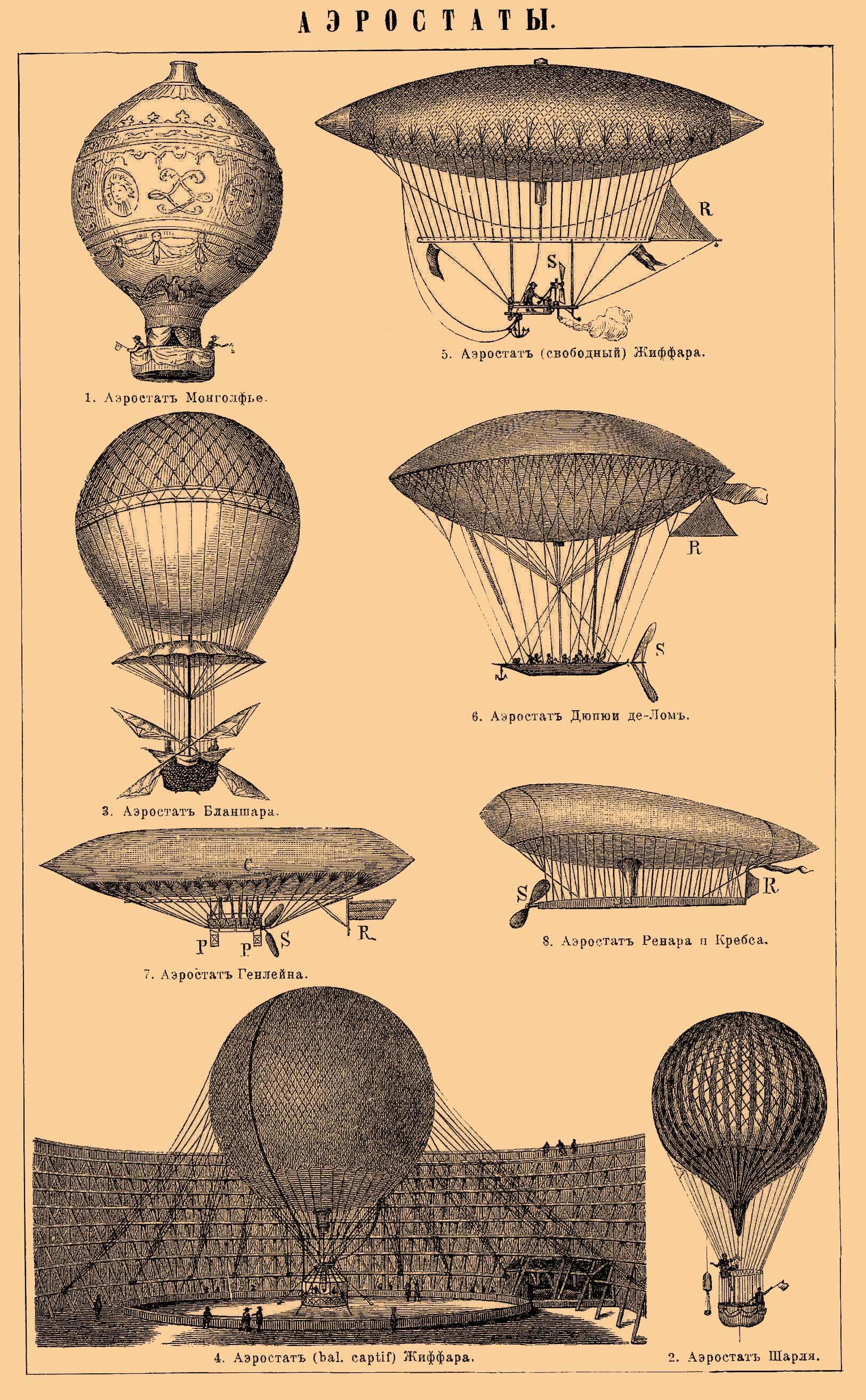
In history, lighter than air craft were the first successful manned aircraft.  The first manned hot air balloon was launched in late 1700's.  The first manned hydrogen balloon was also launched in late 1700's.  The American Civil War saw the use of balloons for map making and reconnaissance for the military, thus starting the precedence of the Army Air Corps that later became the United States Air Force.  These low-tech ships of the air gave man the first experience in the heavenly expanse that was the domain of birds.  For the first time, man could get a birds' eye view of the ground.  From balloons came the dirigible or airship which had steering and propulsion in the form of propellers.  Man learned how to navigate the air.  These craft preceded heavier than air craft such as airplanes by over 100 years.  Hot air and helium are the most common means of providing buoyancy in the air.  Today both these types of lighter than air craft are in use.  Recreation, commercial, military application, and exploration applications use balloons and airships.  Let's take a look at the different lighter than air craft.

I recently went to the 40th Hot Air Balloon Race in St Louis.  Each balloon had a ground crew and pilot.  Each had a basket and burners.  The shapes and colors of the balloons varied.  The pink bunny balloon lead the charge and in fact was 'hare' of the race, just like in dog racing.  The balloon who dropped a bag of seed closest to the pink bunny balloon where it landed won.  I don't know who won, but I got some good pictures of the prep and race (see slideshow below).  Since these balloons are not powered, they travel with the wind.  A good pilot can direct the balloon with the knowledge of knowing what the winds are doing at different altitudes.  These balloons started at Forest Park and went West.  On my way home from the park, my wife and I got to see the balloons over head on highway 40 (I-64).  It was a spectacular sight.  People on bridges, out of their homes, and from their parked cars watched these behemoths float on by.  Large colorful silent craft seem to attract attention.


Created with flickr slideshow.

MA-3A at New Orleans
Airships have a military history.  In World War I they were used as bombers.  After that war, German engineering in the rigid airships called Zeppelins were distributed among the allied forces.  The United States ended up getting airships by buying and building them.  The US Navy and Army operated these ships of the sky.  Today the US Navy owns one airship called MZ-3A.  Its and ship used for research, but it was used by the Coast Guard to survey the Deepwater Horizon oil spill in the Gulf of Mexico in 2010 and to coordinate cleanup efforts.  The US Army contracted Northrup Gruman for an airship they call Long Endurance Multi-Intelligence Vehicle (LEMV).  It's a hybrid airship.  That means that it uses aerodynamics to produce lift along with helium.  It's being marketed under Hybrid Air Vehicles.  It touts long endurance, heavy lift of cargo, and landing anywhere without special infrastructure.  It's the most advanced airship today.  The other modern semi-rigid airship is the Zeppelin-NT.  It touts all weather flying, something that was sorely lacking in the airships of the past.  The Zeppelin-NT is a passenger craft and is in the tourist business.  They are trying to market it for cargo, but I have yet to see anything written about successful cargo flights.  Unfortunately, both of these high tech airships suffer from a lack of business, so not many exist.   Most commercial airships today are the simple blimp.  These are large bags filled with pressurized helium with gondolas (cabin for pilot and passengers), propellers, and tail fins.   You see them with large commercial signs on them, and they provide a stable in-flight platform for cameras for a sport stadium.  There is another type of airship that's for recreational use, it's the hot air airship.  Like the hot air balloons these are colorful and take just a couple of people aboard.  They do have propulsion and steering. Unlike airships, they handle their altitude via adding hot air.  I cannot speak of their performance though.  In the area of exploration, one of the oldest missions was that of the Norge airship which crossed the Artic in 1926.

Tandem flying high
Some balloons can fly very high.  So high that space programs such as NASA make use of them for flying telescopes and experiments.  They can reach to heights about 19 miles in the air.  The air is very thin up there, almost like space itself.  JP Aerospace is a private organization that has been sending high flying balloons for a while.  They want to go bigger.  They want to make a high flying station called Dark Sky which would serve as a staging area for two different airships.  One launches from the ground to Dark Sky and the other launches from Dark Sky to orbit.  That's a high flying idea, float to space.  Recently they made an unmanned airship that was the highest flying airship ever.  They called it Tandem.  JP Aerospace is one of the few organizations doing exploration and taking science experiments to the edge of space.  Now, let's mention the balloon taking a man up near space so he can jump out.  I''m talking about Redbull's Stratos.  It can hold 30,000,000 cubic feet in volume, that's really big.  The thing about these high flying balloons is that their payloads usually get to the ground by parachute and not by landing as the recreational hot air balloons do.  So jumping out of a balloon near 100,000 feet seems rather reasonable though frightful.

 
Well, there you have it.  A brief synopsis of lighter than air craft.  An old idea still living on.  Young person, you are the future.  You need to decide whether lighter than air craft are relevant for the future, or should go the way of the dinosaur.

Sunday, August 12, 2012

Aviation in St Louis

St Louis is a relatively small metropolis compared to New York, Houston, Chicago, or San Fransisco.  Even so, it has boasted of strong financial institutions in the past and today still has a good foothold in the financial market.  It was financial investors in St Louis who lent her name to a plane that became legendary, the Spirit of St Louis (see Spirit of St Louis at Smithsonian National Air and Space Museum, Washington DC).  Charles Lindburg flew this plane over the Atlantic Ocean non-stop for the first time and thus winning the Orteig Prize and opening up commercial aviation between the United States and Europe.  In fact, St Louis has some things to offer where it comes to aviation.


Aircraft manufacturing is headed by the Boeing Company.  They build F-18s and F15s.  This plant was the McDonnell plant back in the Apollo era and made the Mercury and Gemini capsules.  One of each is at the St Louis Science Center on display.

Lambert Airport provides commercial flights all over the country and surrounding countries.  Spirit of St Louis Airport sports charter plane companies as well as two flight schools (one for planes and one for helicopters).  It also has facilities for private aircraft.

Every year there is a hot air balloon race in Forest Park.  It features a night of 'balloon glow' which is when they inflate and light up the balloons for a 'breath taking view'.  The next day, the balloons take off to the skies and race.

Finally there is also an aeronautical school in the area.  St Louis Aeronautical Institute is part of the St Louis Community College.  It provides courses in manufacturing aircraft that go to an Associates Degree in Skilled Trade Industrial Occupations Technology.

One key note to say, the Ansari X Prize that gave the competition and prize money for the first commercial company to make a space ship that would go to space suborbitaly twice in two weeks and lead to the success of Burt Rutan's SpaceShipOne and thereby Virgin Galactic, was based in the St Louis Science center at the time of the prize award in 2004.


Well, this should give you a good idea what is out there in the aeronautical world in St Louis Metropolitan Area.  Aeronautics is a big world.  If you choose an occupation in it, there's a good chance you will travel to other places.  St Louis has a history in aeronautics and it also has a present.  I wish it had a continued stake in the new commercial space race.