Saturday, November 17, 2012

Slow Rotor Imaginations

I love the slow rotor technology developed by Carter Aviation Technologies.  It is a smart vertical takeoff and landing craft with long range.  Hopefully it will find a good market in aviation.  The engineering being this tech is pretty impressive.  As cool as it is as it is, I love to imagine what technologies can do if they were configures or applied differently.


What if the Carter Copter had a different wing configuration?  Actually I was thinking about a lifting body configuration.  Now that may sound strange or even insane, but bear with me a minute.  The wings on the Carter Copter are long and thin.  They are not used to provide lift during takeoff and landings, the rotor does that.  They are to provide lift during cruise at speed.  A lifting body needs speed to provide lift.  In fact it needed a lot of speed even to land.  So it could be a good candidate for the Carter Copter.

Now, the engineering needed to fashion an appropriate lifting body for the Carter Copter has to be creative. The lifting body has to provide lift for the craft at cruise, stability for flight, and allow for enough down wash of air from the rotors for takeoff and landing.  I imagine a rather thin one with a rounded nose and a bulbous dorsal.  The benefit of a lifting body to the craft is that it would have less drag while in cruise increasing the lift to drag ratio.  It should also provide a good volume inside the body for accommodate crew, passengers, and cargo.  Could such a lifting body be designed?  Would its performance be better than wings?  Would it be stable enough?  Would it really be worth it?  These are the questions engineering would answer on paper.  Some major aerodynamics would be utilized in such a project.

Let's take this tech to the next level.  Could it be pushed to supersonic speeds?  Lifting bodies can even do hypersonic speeds.  The real question could the rotor be designed in such a way to handle such speeds.  The rotor was redesigned by Carter Aviation Technologies just to crate the slow rotor tech.  What design changes would you have to make to handle transonic speeds?  Doesn't it get you thinking?  You could end up with a supersonic aircraft that doesn't have to land or take off from pavement, let alone a runway.

Such musings are fun for me.  You can take an existing technology and turn it into so much more.  Of course, it's just musings.  Reality has a tendency to shatter dreams.  Proof is in the numbers and experiments though.  Those can be just as fun.


Saturday, November 10, 2012

Replacing The Rocket Engine?

Have you read Dr. Zubrin's article on VASIMR?  WOW!  Dr. Zubrin knows his stuff.  Many scientists and engineers know their stuff.  There is just a lot of controversy and opinions about how to get to Mars.  Thank goodness that they are not trying to decide on a recipe for pumkin pie.  They'd have to put on my tomb stone, 'Died waiting for pumking pie.'  Yeah, Dr. Zubrin has some misgivings about VASIMR, but what is VASIMR and what are the other propulsion systems he's talking about?

Deep Space 1 - first spacecraft to use Ion Drive
VASIMR (Variable Specific Impulse Magnetoplasma Rocket) is taunted as a plasma propulsion system.  It uses radio waves to turn matter into plasma then uses magnetic fields to accelerate the plasma out of the exhaust.  If the energy is doing two things, you can see that the efficiency of the system is probably not good, just as Dr. Zubrin said.  Sometimes projects need longer time than others to come to a good solution.  If you look at the history of the internal combustion engine, you will see that it has a long list of epochs and people working on one thing or another that eventually became the internal combustion engine we so adore by revving our engines while standing still at a red light looking at one another as if we were a formula 1 race car driver while living things choke on the fumes.  Despite Dr. Zubrin's desire to excuse VASIMR and politician's desire to promote it, it still may be key to a future and better propulsion system than we have today.  Yes, we should've told old Robert Goddard to stop playing with those toy liquid fuel rockets, nothing would come of them.  No, nothing; just taking men to the moon.  That's all.

Ion drive is a propusion system that emits ions.  It uses an inert gas and voltage differentials to accelerate the gas.  The result is that it takes a long time to get to the destination, but its cheaper than large conventional chemical rockets to get up to speed.  Deep Space 1 got to fly around the southern pole of the Sun and Smart-1 got to go from Earth orbit to Lunar orbit on ion thrusters.  Dawn got to Vesta and then to Ceres.  It could only accomplish visiting two space bodies with an on board main thruster such as the ion drive to escape the orbit of one and insert into the orbit of another.  It's like scampering around the asteroid belt.  I hope it finds its cheese.

Thermal nuclear propulsion system is one that emits matter heated by a thermal nuclear reactor.  We're talking a rocket here.  Well, the idea is that energy in the form of heat from a nuclear reactor can heat up a gas and produce really fast speeds for a spacecraft.  That could be a potentially good propulsion system.  OK, let's see.  In the wiki it mentions thermal nuclear reactor and hydrogen in the first sentence.  It also mentions that a core was made in 1955.  I don't know what they were smoking in 1955, but it must have been good stuff.  What do you tell the first guy that's going to fly this thing?

"Here you go buddy, just plant your seat right there and strap in.  Concerns?  Nah, we don't expect anything to go wrong.  It will be a fun ride.  Here, just sign on the dotted line right here.  Small print?  Don't let it concern you, it's just some legal mumbo jumbo and all.  Have a safe trip."

Who in their right mind would fly this?  I don't think the human psyche can dismiss images of a big explosion when talking about nuclear reactor and hydrogen together.  Dr. Zubrin wants NASA to research this.  I hope a working model would be indeed safe.

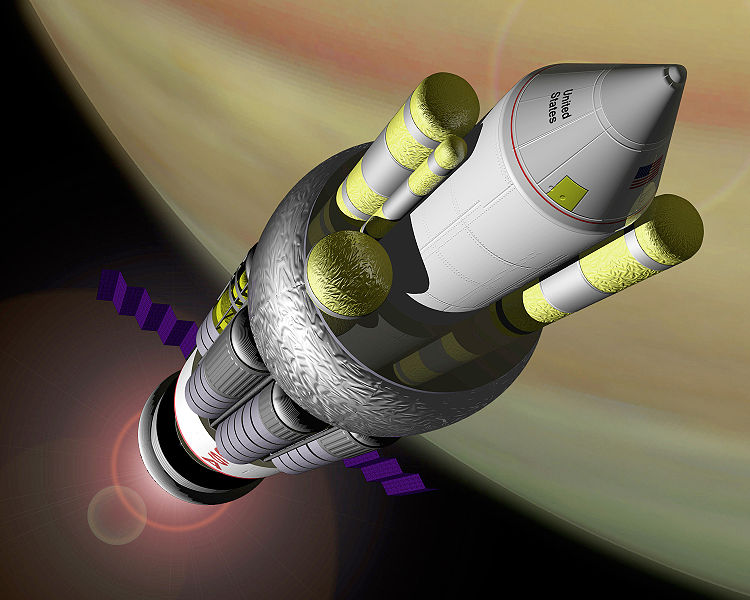
Let's talk about the big one, nuclear pulse propulsion studied under the name of Project Orion.  Essentially, its thermal nuclear explosions detonated just behind a very thick pusher plate.  Do this several times and the craft accelerates in pulse intervals.  It's funny that the scientists were talking about making a farm on a spacecraft that uses this propulsion.  The energy this thing can harness is enormous.  It's the largest energy per weight that we know of.  The scientists involved do agree that there were some issues with the system to be worked out.  The basic idea works, and was tested on small scale with conventional explosives.  Now, it's pulse propulsion.  That means one minute your all fine and dandy and the next your splattered against the back bulkhead until the acceleration stops.  Then it starts all over again.  How uncomfortable does this seem?  Can you imagine a cow handling this?  You'll probably end up with sour milk.  In spite of the challenges of this system, the scientists were optimistic about making a viable system.

Light Pulse propulsion is a modern idea that has some relation with nuclear pulse propulsion.  The idea is that while in atmosphere, a laser can give a reflector with a particular shape power to heat up air and make it expand thus propelling the craft.  The laser is shot form the ground.  This is to propel a craft from the ground to orbit as a first stage.  It's a compelling idea, because you have your power source on the ground and not as dead weight on the craft.  If you use a dedicated nuclear power facility with a very large laser, then you can lift a lot of stuff and many craft to orbit reducing the cost of launch over time.  I like this idea.  I wonder if it can roast some marshmallows in flight.  The in-flight meal should have s'mores in it.


Well, that's what Dr. Zubrin was talking about, and more.  We get weird ideas about how to travel from point A to point B.  Most don't work.  We keep trying until we get it right.  You can get your idea a try if you study Math and Science.  Your going to have to learn to write and argue as well, because your going to get criticized. Are you up for the challenge?

[NOTE FROM THE AUTHOR: The humor in this post is and experiment. In no way was the intention to criticize.  I'm sorry if it comes off that way.  I'm keeping the post as is as a reminder of how poorly chosen humor can hurt.]


Saturday, November 3, 2012

Propellers In Space

The Shuttle had wings to fly its way to a soft landing on a runway.  So wings were used in the Earth's atmosphere to help spacecraft operate.  What if rotary wings could do something similar?  The first commercially successful rotary wing craft were De La Cierva's autogyros.  The autogyro works on the principle of auto-rotation.  Therefore, it can make safe unpowered landings.  A helicopter works on the principle of powered rotors which allows it to take off vertically.  A rocket lifts off vertically and its capsule lands with parachutes in a vertical fashion.  So you see mixing these technologies together may not be so far fetched after all.  Let's look at a couple of projects.

NASA's Roto-Capsule concept

NASA put out the news report entitled Engineers Test Rotor Landings for Capsules. Apparently the Roto-Capsule (I just made it up), uses auto-rotation like an autogyro does.  They also want to figure out how to get the rotors to start spinning.  In old and small autogyros, you hand start the rotor spin.  Yep you have to use those mittens, and don't stand up too tall or you might get whacked by a blade.  The larger and enclosed autogyros use a bendable drive train from the engine to the rotor hub.  I suppose NASA could start the rotation of the Roto-Capsule's rotors with simple thrusters or even with an electric motor.  I'm sure they can come up with better ideas than I can.  They do have to figure out what the best solution is, what is the lowest weight for a system, how strong is it, and what are the operational costs to it.  Looking at the picture, I can't help but wonder if this is an excuse to get scientific data form the engineers propeller beanies.

Another project was, if you can believe it, a rocket with rotors on the top.  It was called Rotary Rocket.  Apparently its rotors were also for landing.  The concept was revolutionary for its time; late 1990's.  It was touted as a single stage to orbit.  It went as far as a demo vehicle that flew with powered helicopter rotors.  There were aerodynamic problems with it, but an arial test vehicle was made and flown showing that rotors could lift the rocket.  It was almost sad to see this project die, but I think they put too much in the concept.  I mean, why would you want to use rotors to land a rocket?  Wouldn't the rotors be useless weight for most of the flight?  You can say that wings are too, and they are.  Rockets would be less overhead weight as far as hardware because you need to rockets to launch as well as land.  I suppose the argument is how much extra fuel your willing to take on a flight.  That's where the weight trade off is.  Rotary wing craft are what we have that closest behaves like a small space ships in sci-fi fiction in atmosphere; they land and take off vertically. I guess sometimes we can dream too big.


In my own muses, I thought if we can air launch a rocket to orbit with a plane, then why not with a rotary wing craft?  The craft would have to be very large though.  It would have to be custom made to lift vertically to altitude.  It would have to be a separate vehicle from the rocket.   I imagined it being large enough to fit the rocket in the middle of it and launch at altitude in a vertical attitude.  The savings would come with launching from altitude in a vertical position.  It does seem superfluous though.  Stratolaunch is making the largest plane to launch a medium size rocket from altitude.  The plane will probably need the biggest of runways.  That's where my rotary wing craft could come in; in scaling up.  I wouldn't need a runway, just a pad.  That's less ground infrastructure than a plane.  These are just muses though;  ideas of runaway imaginations.  Rarely does a dream come to life.  I'm glad of that, cause I've had some nightmares.


So we looked at a couple of projects that involved rotary wings and space craft, and then one of my imaginations.  That's what your going to get when you read my stuff.  I just scrape things off the wall.  Is it really a good idea to mix rotors and spacecraft?  Maybe, but also maybe later.  We still have a lot to learn about launching stuff into orbit on a shoestring budget.

Sunday, October 28, 2012

Leave NASA behind? I Think NOT!

I recently read an article that advocated a full retirement of NASA in favor of commercial space companies.  The article can be found here.  It was written by Omar Allam of the Daily Campus.  While I support the commercial space effort, I don't advocate canceling NASA altogether.  NASA has been in the space flight business for over fifty years.  We need NASA for research and guidance.  Let's look at NASA's past, present, and future.

Bell X-1
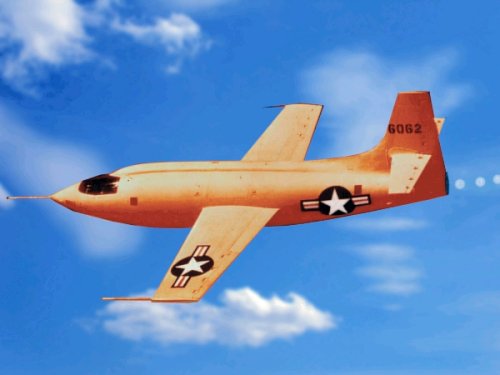
Before NASA was what it is today, it was NACA (National Advisory Committee for Aeronautics).  It did research for the aviation industry.  It figured out what was safe and what was not.  NACA was open for both commercial and military aviation research.  Its crown project was XS-1 or Bell X-1 which broke the sound barrier.  NASA took over all NACA's assets in 1958.  They still do research for aircraft of all sorts.  Check out their aeronautics web page.  They still have valuable research for aviation.

NASA has sent men to the moon and back to Earth.  It has maintained a human spaceflight program since the early 1960s.  It has operated some of the biggest and most unique spacecraft in human history.  It has documented all that experience and research.  Now, with a budding new space market for humans NASA has much to offer.  How to make rockets, how to launch spacecraft, how to protect spacecraft, how people live in space, how to assemble space assets in orbit, and the list goes on and on.  This stuff is invaluable to companies like SpaceX, Orbital Sciences, Boeing, and Sierra Nevada who are making spacecraft for humans and their stuff.  Without NASA, these companies wouldn't have the opportunity to be successful in this current era.

Gemini Rendevous
NASA needs to stay as the prime space research institution for questions that have yet to be answered.  How do you really mitigate bone loss in humans?  What is the best way to engineer artificial gravity?  What ways can cosmic radiation be reduced for acceptable levels for humans?  How do you grow food in space?  How to recycle vital resources such as air and water?  What emergency procedures should there be in case of a rapid decompression?  What alternate propulsion can we have?  Question like these and many more I haven't thought of and many many more we are yet to ask are all areas where NASA research is beneficial.  These questions are one to be asked by commercial companies as they increase there sphere of operations in space.  NASA should be there to get them answers.


Understanding the roots of NASA and what it is currently doing, we can grasp its future role.  I advocate a cooperative effort between commercial space companies and NASA.  Anyway you look at it, it's a win win situation.  Our past success in space is due to careful actions on the part of government space programs around the world.  NASA is one of the premiere space programs in the world and one of the highest esteemed in aerospace research.  It would be foolish to set it aside.

Saturday, October 13, 2012

Round Wings

From time to time in the history of flight there has been some unusual designs.  None are more unusual than round disc-like wings.  If you google "round wing" or "disc wing" you get all kinds of images of planes in history with round wings.  Funny thing is that some of these planes are popularily known and were done in the open.  Others were secret projects, and their information is part of lore.  Let's look at some of them.

McCormick-Romme Umbrella Plane
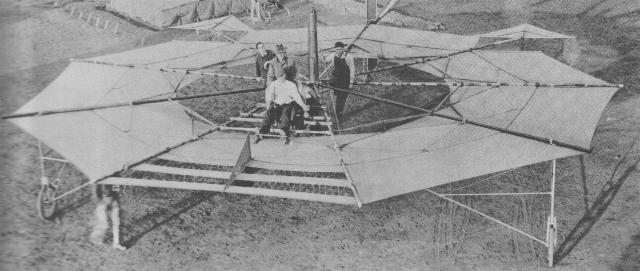
Among the earliest ones I found was the 1911 McCormick-Romme Umbrella Plane.  The link goes to an obviously private site.  Yet the plane is listed in the Wikipedia page entitled "List of aircraft".  I find it fascinating that in 1911 people were coming up with all kinds of ideas for flight including a round wing.  We're often told that flying machines followed birds in the way they fly.  Have you ever seen a round wing bird?  I suppose the frisbee had something to do with the thought pattern of the design of this plane.  Throwing around a spinning cake pan is a fun toy, why not make it into a flying machine?

DiscRotor
Johnathan Edward Caldwell came up with some fascinating ideas for flight.  One of them was a sort of autogyro with a disc on top.  The disc had four rotors coming out of it.  The idea was that the disc and rotor rotated and lifted the craft off the ground much like an autogyro.  Then as the craft sped up, the rotor would stop and the disc would provide lift acting as an airfoil.  Well, today this idea is being explored anew.  The DARPA DiscRotor project is trying to make a VTOL aircraft with this disc and rotor combination.

In the 1930's and 1940's Germans were doing much technological research.  Messerschmitt came up with the Me-600.  This was a propeller airplane with the main wing in a disc shape.  It had a tail with elevators and a vertical stabilizer. It seems this idea wouldn't go away.  I did find some evidence that Russians have built small aircraft similar to the Me-600. 

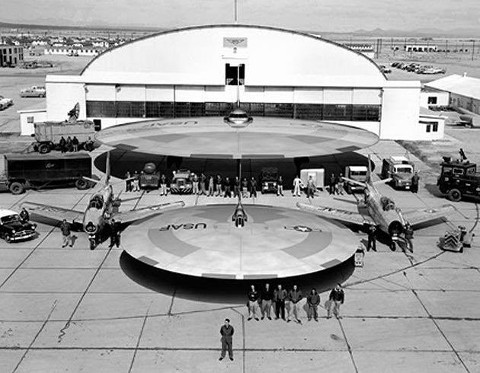
Ok, let's get back to baking.  Instead of a flying cake pan, this next one was named after America's favorite breakfast.  The V-173 Flying Pancake had two very large props which gave lots of power to the craft and solved the problem of airflow circulating around the sides of the wing form the bottom to the top and reducing lift.  It demonstrated near vertical lift.  The large propellers design showed merit enough to make its way into the tilt-rotor design.

There is a lore out there that the United States has or had bomber size aircraft with round wings.  Some people have claimed to have seen them.  Some computer generated pictures have been made of them.  They look pretty cool.  A round wing with a nice curve to it seems sexy.  So these things supposed to have been responsible for UFO sightings in the continental Unites States.

There is a guy that came up with a unique design for an aircraft.  The main wing and the elevators were merged into a round shape.  It was an idea that seemed similar to some earlier designs, yet it had its own characteristics.  He had it put through a wind tunnel and made an RC model of it.  The design seemed airworthy.  He was going to market it.  I'm not finding any reference to it on the web.  I did see an interview with the guy and a reporter.  He came up with the idea around the 1990's.  So people are still thinking about round wings even today.


So I detailed some designs of round wing aircraft.  Sure, you can call them flying saucers.  I like my saucers to hold my tea cup, and not fly me around.  Its a design that somehow entered our psyche and it won't go away.  Design ideas tend to feed on themselves.  New people pick up the idea and try to run with it.  They tend to have limited success until someone makes a breakthrough.  Makes you wonder if we own ideas or do ideas own us.


Sunday, October 7, 2012

In-Space Ship

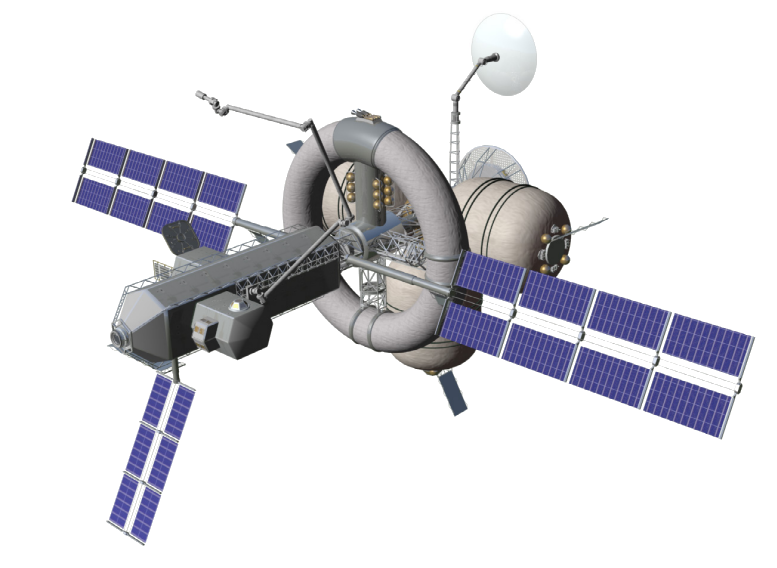
I don't allow comments on this site, because I know how varied the aerospace peeps' opinions are, and there would be much debate.  So, I let people do their commenting in their favorite social media.  Yet, because of a mistake of mine, someone made a comment and suggested that NASA should invest in an in space ship such as the Nautilus-X which was a research study on how to build a multipurpose spaceship that stays in-space and is used on many missions.  Thanks Nydoc.  Which is true, why not go that route?  Let's look at some things in-space ships need to provide, and then one of my ideas for interplanetary travel.
Nautilus-X

Now, when were talking about in-space ships, the image of a single favorite large space ship from one of many sci-fi stories, shows, and movies crops up.  Yet, when we consider how many and varied the modern ships of the sea are, we would want to consider many of these ships.  We, as humans, need some specific things from this type of spacecraft.  Let's talk about these specifications in general.

An in-space ship would need to be reusable.  It's going to cost a lot of money to build just one.  We should be able to use it on many missions since it's not going to burn up in any atmosphere.  This means we need to restock it with fuel and provisions.  The ISS is being resupplied with several cargo ships.  The Russian Progress craft brings cargo and can refuel the ISS so it can keep its obrital altitude.  The European ATV can also refuel the ISS.  NASA is currently experimenting with in-space refueling with its experiment RRM.  It should be able to be cleaned.  I read that at least one time in the Mir space station, one of the crew opened a panel to do some maintenance and found a large sphere of water with microbes in it.  Apparently, the condensation collected in the cubby hole.  A in-space ship needs to be able to be cleaned in orbit to prep for next mission.  Air-liners are cleaned after every flight and replenished in a couple of hours.  The crew in the ISS have routine cleaning and maintenance duties.  There is a lot of aspects to reusability.  Another experiment on the ISS is the Water Reclamation System.  It recycles urine and turns it into potable drinking water.  Such a system would be needed on our space ship along with all the ISS life support systems which include an air purifier.


It goes without saying that a space ship is supposed not only to transport crew and cargo but protect them from the environment.  Extreme heat, extreme cold, lack of air pressure, and cosmic rays are just some of the things people need protecting from in space.  The one we really need to research more is cosmic rays.  The ISS is inside the magnetic field of the Earth and thus is more protected from cosmic rays than the space between Mars and the Earth.  The Sun emits Coronal Mass Ejections from time to time.  One of these can disable the electronics on a space craft.  There's a whole wiki page on cosmic rays and the human body.  It highlights the dangers of radiation in deep space.  Some ideas to solve the radiation problem involve giving the ship its own magnetic field to keep radiation particles from equipment and crew.  Other ideas involve heavy shielding such as metals or even water to create a 'safe room' for the crew.  However we solve it, this issue must be solved for humans to venture out into other areas inside the inner solar system.  After we accoplish that, then we need to learn how to venture into the outer solar system and even into interstellar space.  As you can figure out, that's a long long way off.

Since the space race between Russia and the United States, space craft have had a modular construction by design.  That is, major pieces are able to connect together in space whether by docking or berthing.  This has served us well in orbit and even getting to the moon.  In science fiction, you rarely see such modularity design because writers want you to think of large ships and space stations as one thing rather than several things.  Modular design will still serve us well in an in-space ship, in my opinion.  You can take the ship and use it as a platform for different types of missions.  Air planes are called platforms when they are being equipped with stuff for special roles such as hurricane probing, surveillance, or even war.  The Air Force's X-37B is a platform for who-knows-what-the-US-Air-Force-wants-with-it.  Not only that, but modularity can be used to outfit a ship with new or different type of propulsion system, just in case we develop a warp capability.  If for instance we need our in-space ship, let's call it Intrepid, to take astronauts to an asteroid, it's going to need special equipment like some kind of lander.  If the Intrepid is going from 4 man crew to 8 man crew, it will need more living space, so an extra habitat room module can be berthed to it.  Capsules or other earth landers (space plane, perhaps) will have to dock to the Intrepid so crews can arrive and leave it.  The list goes on.  Modularity is quite an asset for space ships.


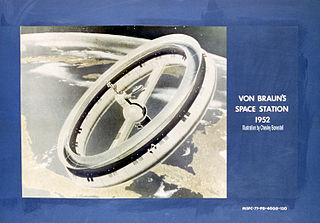
Another problem we have to solve is the bone loss that the crew will experience by living in a zero gravity environment such as our Intrepid space craft.  One possible way to do this is to get rid of the zero gravity environment.  That is using centrifugal force as an artificial gravity as Von Braun imagined.  Looking at pictures of the Nautilus-X you can see they included a wheel in its design.  This is a rotating wheel giving the crew some artificial gravity on a part-time basis.  Such a device would require bearings and perhaps gearing to make it work.  I thought, why have only part of the ship rotate?  Why not have the whole ship rotate, thus getting rid of some of the mechanical devices?  You could design a ship to rotate during the long trips to where ever your going and not rotate when loading/unloading the ship.  I would think operating like this would be more natural.  You don't need a wheel either.  You could design it like a pencil and have it rotate end over end, or you could design it like two tubes in parallel attached by trusses.  So far, on the ISS the crews have been trying to slow the bone loss by exercising about two hours a day.

When it comes for our Intrepid space craft to move, it will need propulsion.  Now rockets rely on chemical reactions to get the thrust they need, and they are rather short lived.  Our space craft will need a longer lived propulsion system.  One possibility is and ion drive.  Deep Space 1was the first space craft to prove ion drive technology away from Earth.  For the first time, a space craft had its own propulsion and could change its direction without a gravitational sling shot assist form a gravity well such as a planet.  Smart-1 made it from Earth orbit to orbiting the moon with one.  Dawn is the first ship to go to the orbits of two space bodies using ion drives (if it hasn't yet reached Ceres, it's scheduled to in 2015).  Pretty amazing stuff for this technology.  Another candidate for our Intrepid would be VASIMR or perhaps another plasma based thruster technology.  These are both driven by electricity, which gives it some versatility, because solar panels may or may not cut it for navigation in the inner solar system.  An ship like the Intrepid would be heavy and would require a lot of energy for thrust.  Luckily, it would have time in its side.  That's what the ion and the plasma thrusters exploit, journey time.  Over a period of time they provide a good amount of thrust, more than chemical thrusters can.  Some may ask about using solar sails for thrust.  I believe they could help, but may not be good enough for sole propulsion.  Some cargo sea ships use sails or power kites to help save fuel.  Why not a space ship?  We do need much research on that.  Currently, Ikaros is the only successful solar sailor.

A ship like our imagined Intrepid is a tantalizing prospect.  Yet, years ago I thought of a different in-space ship.  It was essentially a tug.  What it did was to travel and take satellites, probes, cargo and/or crew to a destination and then return home.  Operation remotely, such a craft would need power, communication, propulsion, and perhaps some shielding.  On it's return to Earth, it could jettison a crew/cargo/sample capsule that could land on Earth.  Then it could change heading to use the Earth's atmosphere as an aerobreak for a few weeks until it's back in orbit and ready to be outfitted for the next mission.  Modular design is key here.  You could out fit it with everything a crew could need, or easily as well load a probe for Mars or Venus on it, or even a pod of cargo to support crews on Mars or the Moon.  To me it seems a pretty straight forward operation.  I can't see any reason why a commercial company couldn't make a business out of operation one or two of these tugs.  It seems to me a good way to colonize the inner solar system.


So there you have what in-space ships need to do for us as well as one of my own ideas.  It's not a complete list by no sense of the imagination.  Much is to be put into one of these, and much is yet to be discovered.  It's exciting to understand that we could do this, we could go to Moon, Mars, Asteroids, and even Venus.  That's a big frontier.  Ready to ride into the sunlight?

Friday, September 28, 2012

NASA's Exploration In Funding

NASA has a dilemma.  It wants to take the next step in human space exploration.  That step invloves leaving Low Earth Orbit and going to the Moon, Asteroids, and eventually Mars.  The problem is that since the mid 1990's Congress has not been providing money to NASA to meet their ambitions.  NASA has one of, if not 'the', premier manned space programs.  With the economic situation in the world I don't see that changing.  Let's look at what NASA is asking the Federal government to do and what an alternate solution can be.

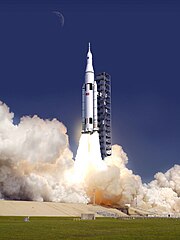
Space Launch System
NASA is making a new rocket.  It's 'going to be' the biggest rocket ever built and flown, if it's appropriately funded.  It's called the Space Launch System (SLS).  It is to launch large cargo or spacecraft to orbit.  I stop short there and some people would say, "No, it's supposed to launch spacecraft beyond low earth orbit".  Well, reality is that to get beyond low orbit, you need to get to low orbit and then have a booster with enough fuel to get you where you want to go.  That is what I call a spacecraft.  For example in the Apollo Program, when the Saturn V rocket got the command module/service module, the lunar lander, and the S-VIB booster made up the space craft that launched from low orbit to the moon.  In the LRO/LCROSS launch, the Centaur booster was part of the spacecraft that launched from low orbit to the moon, even though the Centaur was also the second stage of the Atlas V rocket used to take the stack to low orbit.  The maneuver from low orbit to the moon is called the translunar injection (TLI).  The SLS is projected to cost $18 billion to include the manned spacecraft called the Multi-Purpose Crew Vehicle.  Now NASA is looking for more money but this time to build a small space station around the Moon called Gateway.  In 2006 an estimate cost of the International Space Station was at $35 billion, and that was low balling it.  A small space station around the moon or at a lagrange point could cost just as much or close to it.  The reason is that although smaller, it takes a lot of energy to get it out there.  Will Congress support NASA with full funding in these efforts?  Judging from the last decade, I say no.  The effort will probably be a waste of time and money, just like other defunct NASA programs such as Constellation.

Falcon 9
There is an alternate route that NASA can pursue.  Leveraging commercial companies services to space and in space refueling, NASA can get in the business of human space exploration again.  The Augustine Commission Final Report found that cost of space exploration could be reduced by the use of commercial cargo launches to fuel manned spacecraft to go explore from low orbit and use mid lift rockets such as the EELV and Falcon 9.  This would be an alternative to a large rocket operation such as the SLS which could launch both spacecraft and fuel at the same time.  NASA has pursued a different way of operations with the ISS cargo and new crew with its Commercial Crew and Cargo Office (C3PO) which lead to the Commercial Space Transportation Program.  It operated differently than usual at NASA.  In it, NASA pays for transportation services rather than ownership.  The commercial company owns and operates the launcher and spacecraft.  This saves money for NASA because price is set and doesn't slip like in developing and operating rockets such as Apollo, Shuttle, and Constellation.  This in turn allows the commercial company to make money from NASA and other customers allowing for creativity.  An example of such creativity is SpaceX's DragonLab in which SpaceX gets multiple science customers for one Dragon capsule flight.  In a sense, SpaceX is continuing what Shuttle did for the science community.  So the alternate process for a large launcher would require several launches from Earth to build a TLI spacecraft and fuel it in low orbit.  This would then launch from low orbit and go off and do it's mission on Moon, Asteroid, or Mars.  They could even build a small space station and send it to the moon using ion thrusters without people, only to be manned when its in its position in a Lagrange point or around the Moon itself.  The launchers needed exist today.  SpaceX is in the process of building a bigger launcher called Falcon Heavy which could bring down the cost per launch of such efforts.  I think the real key to success is to operate like NASA'a C3PO suggests and pay for services rather than own launchers.


NASA should get out of the business of making rockets, and get into the business of exploration, science, and aerospace research alone.  It's time commercial companies take over launches.  The United States won't financially support NASA's ambitions with business as usual.